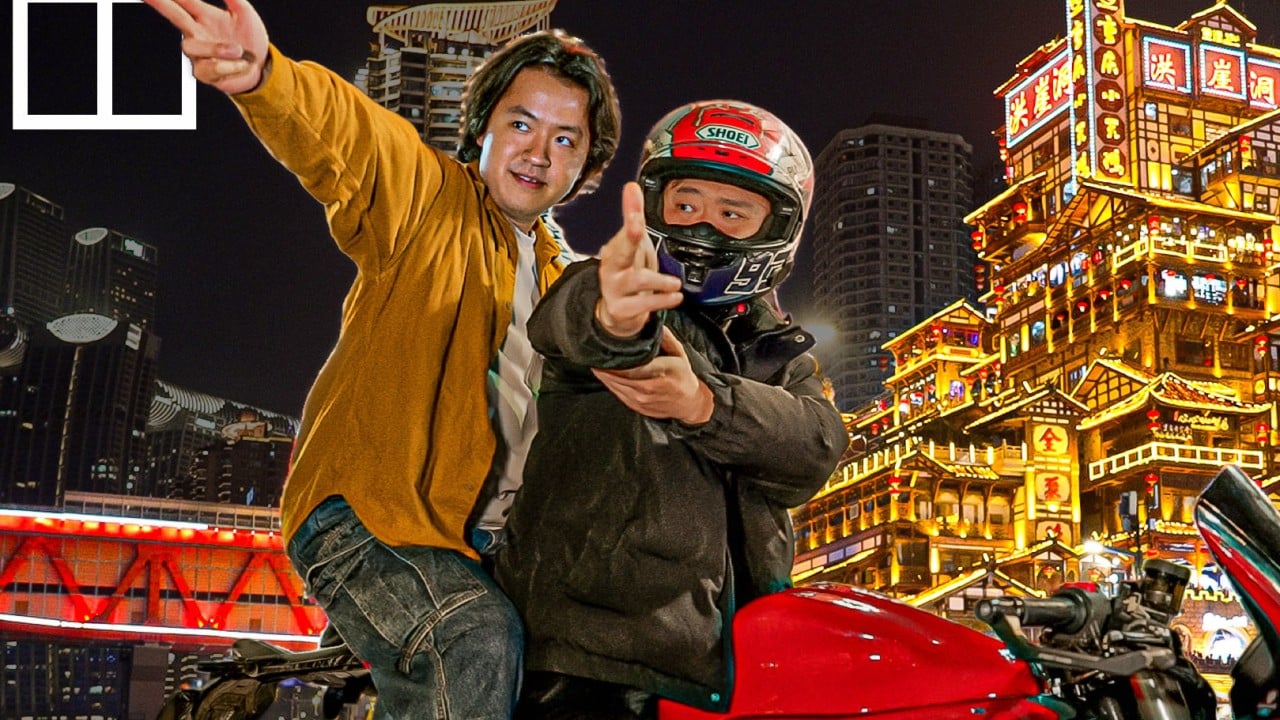
Chongqing is currently trapped in a gilded cage of its own making. While the city dominates Chinese social media feeds with dizzying footage of monorails slicing through apartment buildings and neon-lit stilt houses, the transition from a viral sensation to a legitimate international tourism hub is stalling. To succeed, the city must move beyond being a mere backdrop for short-form videos and address deep-seated structural deficits in its hospitality infrastructure, linguistic accessibility, and cultural storytelling. The novelty of the "3D City" is wearing thin, and global travelers demand more than a photo opportunity.
The Short Video Trap
The city’s rise was an accident of the algorithm. When Douyin and Instagram users discovered the Liziba Station—where the Line 2 monorail enters a residential high-rise—Chongqing became an overnight theme park. But viral fame is a fickle foundation for an economy. Most visitors arrive, snap a selfie at Hongyadong, eat a spicy hotpot, and depart within forty-eight hours. This creates a high-volume, low-margin tourism model that strains local resources without generating the sustained economic impact seen in hubs like Tokyo or Paris.
The city has become a "check-in" destination. This means people come to verify what they have already seen on their screens rather than to discover something new. When a city exists primarily as a digital aesthetic, it loses its soul. The grit and industrial history that define the spirit of this mountain city are being airbrushed away to make room for more LED lights and observation decks.
Infrastructure for the Masses Not the Individual
Navigating Chongqing is a nightmare for anyone who doesn't speak fluent Mandarin or possess a local bank account linked to a specific payment app. While the city’s geography is inherently confusing—with its layered streets and hidden elevators—the lack of an integrated, multi-language transit and payment system serves as a massive barrier to entry for the high-spending international demographic.
Western travelers, in particular, often find themselves stranded in a digital ecosystem that is closed to outsiders. If you cannot call a ride-share or read a menu because the QR code requires a local ID, you are not a guest; you are an intruder. The city’s planners have focused on building grand bridges and sprawling malls, yet they have neglected the "last mile" of the visitor experience. Simple things like English-language signage in the sprawling underground labyrinths of Jiefangbei are often nonsensical or entirely absent.
The Problem of the Vertical Labyrinth
Chongqing is famous for its verticality. You can enter a building on the first floor and exit on the eleventh floor onto a completely different street. It’s a marvel of engineering, but it’s a logistical disaster for a tourist without a local guide. Standard GPS often fails in the "urban canyons," leaving travelers spinning in circles. Until the city develops specialized, high-fidelity mapping tools or physical wayfinding systems designed for non-locals, the frustration factor will continue to outweigh the "cool" factor.
Cultural Depth vs Neon Facades
Beyond the spice and the lights, what is the Chongqing story? To become a global hub, a city needs a narrative that resonates across borders. London has its royalty and history; Bangkok has its street life and spirituality. Chongqing has its "Ba-Yu" culture and its role as the wartime capital, but these stories are currently buried under layers of commercialization.
The historical sites are often treated as stage sets. Huguang Guild Hall and the Ciqikou ancient town have been heavily renovated, resulting in a sanitized version of history that feels more like a shopping mall than a heritage site. International travelers are increasingly seeking authenticity. They want to see the "Bangbang" porters—the men who carry heavy loads on bamboo poles—not just as a curiosity, but as a living part of the city’s labor history. They want to understand the struggle of building a metropolis on a mountain. Instead, they are directed toward another "Cyberpunk" themed bar.
The Hotpot Ceiling
Chongqing’s culinary scene is a double-edged sword. The city is obsessed with hotpot, and for good reason—it is delicious, social, and iconic. However, the city has struggled to diversify its high-end dining options. To attract the global elite, a city needs a range of international cuisines and Michelin-caliber experiences that don't all involve boiling beef tripe in chili oil.
The monoculture of spice is a branding win but a strategic loss. It limits the city's appeal to a specific type of adventurous eater and fails to cater to the broader needs of international business travelers or families who might stay longer if the food scene were more varied.
A City Without a Soft Landing
Most global hubs have "bridge" neighborhoods—areas where the local and the international blend. Think of Shanghai’s Former French Concession or Seoul’s Itaewon. These areas provide a soft landing for foreigners, offering familiar comforts alongside local flavor. Chongqing lacks this entirely. The city is either hyper-local or hyper-commercial. There is no middle ground where a traveler can sit in a quiet cafe and soak in the atmosphere without being blasted by advertisements or jostled by tour groups.
The local government has been aggressive in courting domestic developers, but it has been slow to attract the kind of boutique international hotel brands and cultural curators that give a city global "cool" credentials. The current inventory of luxury hotels consists mostly of massive, soul-less towers that could be anywhere in the world.
The Mismanagement of the Yangtze
The Yangtze River should be the city’s crowning jewel. Instead, the riverfront is largely inaccessible to pedestrians, blocked by highways and massive retaining walls. The river cruises are loud, neon-soaked affairs that prioritize spectacle over the natural majesty of the Three Gorges. Compare this to the walking paths along the Thames or the Seine. Chongqing treats its river as a highway and a light show backdrop rather than a public space.
The High Cost of Cheap Fame
The "internet celebrity" (Wanghong) status has driven up property prices in the central districts, pushing out the very artists and small business owners who create genuine culture. Small noodle shops that have existed for thirty years are being replaced by bubble tea chains and souvenir stalls selling mass-produced trinkets.
This is the gentrification of the soul. When a city optimizes itself for the camera lens, it stops functioning for the people who live there. A city that is uncomfortable for its residents will eventually feel hollow to its visitors. The "B-side" of Chongqing—the quiet tea houses in the hills, the crumbling industrial parks turned into galleries, the hidden stone steps—is being neglected in favor of the "A-side" neon.
The Brutal Path Forward
If Chongqing wants to be more than a footnote in a digital archive, it must stop chasing the next viral trend. It needs to invest in the unglamorous work of making the city navigable and hospitable for people who do not have a Chinese SIM card. It needs to preserve its remaining historic neighborhoods with a light touch, rather than gutting them for "renovation."
The city must decide if it wants to be a living, breathing metropolis or a 32,000-square-mile movie set. The monorail going through the building was a great hook. Now, the city needs to give people a reason to get off the train and stay.
Stop building more skyscrapers and start building bridges between the local reality and the global expectation. This means localized apps for foreigners, better English education for hospitality staff, and a move away from the "one-size-fits-all" spicy marketing. If the city continues on its current path, it will remain a destination people visit once, post about, and never return to. The mountain city has the height; it just needs the depth.