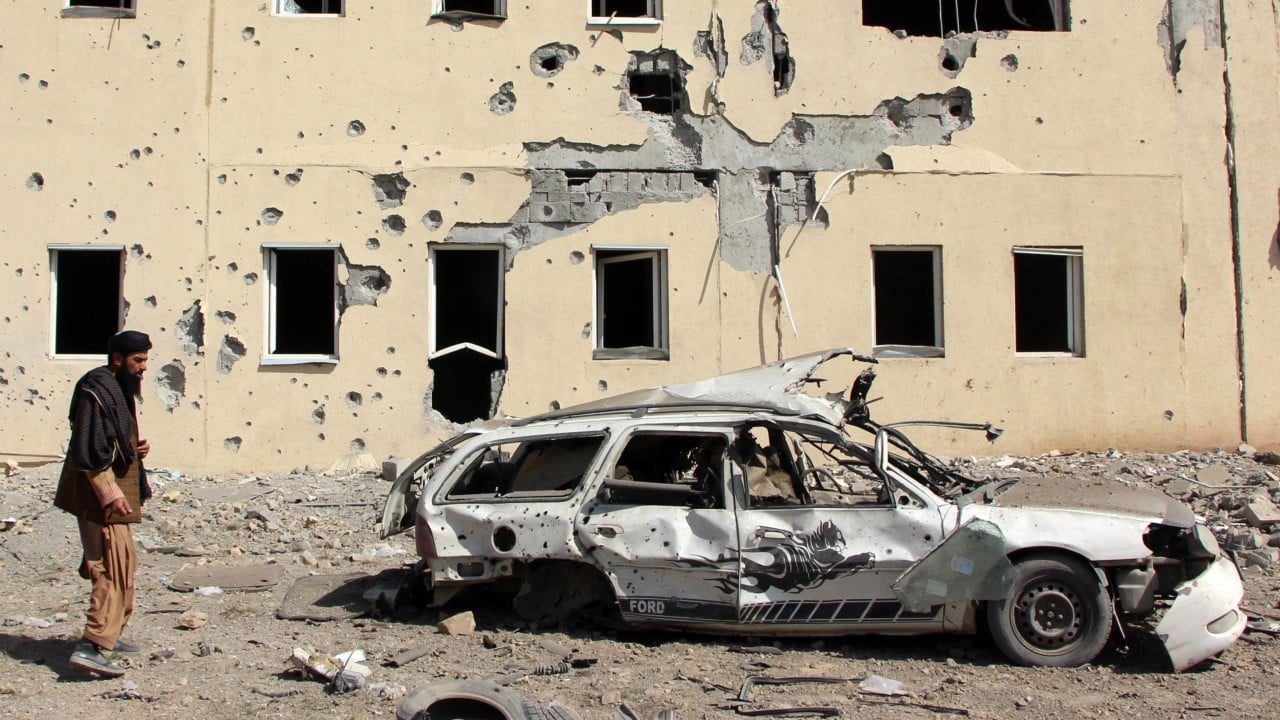
The Middle East is burning. On February 28, 2026, the United States and Israel initiated a coordinated, massive military offensive against Iran. This is not a contained strike. It is a fundamental rupture in regional order. Washington and Jerusalem have moved past containment, stating explicitly that their goal is the total dismantling of the current leadership in Tehran.
The immediate result is a wide-scale, kinetic conflict involving state-level actors, targeted assassinations of high-ranking officials—including Supreme Leader Ayatollah Ali Khamenei—and significant disruption to global energy markets. Ships are being hit in the Strait of Hormuz. Gulf states are under fire. Global aviation is in chaos.
The Strategy of Total Overturn
For years, analysts argued whether a strike on Iran would be a surgical operation meant to delay nuclear ambitions or a broader campaign to degrade military power. The reality of the last forty-eight hours has answered that question with violence. This is an all-out effort to force regime change.
The operational blueprint, executed with extreme speed, prioritized decapitation strikes. By neutralizing the central command structure, the attacking coalition aimed to shatter the Iranian ability to direct a coordinated response. However, Iran’s military hierarchy, though currently in flux, has shown a capacity for immediate, decentralized retaliation. The Iranian response began within hours. Waves of ballistic missiles and drones targeted Israel and coalition assets across the Persian Gulf, proving that Iranian contingency plans were already active.
The United States has utilized its B-2 stealth bombers and carrier-based aircraft to systematically target missile sites, air defense networks, and naval assets. The objective is to establish uncontested air superiority. Israel, meanwhile, has deployed hundreds of fighter jets to strike hundreds of military-industrial targets.
The Illusion of a Controlled Escalation
The belief that this conflict can remain confined to a list of strategic targets is naive. War, once unleashed, follows its own logic.
Iran has already demonstrated that its counter-strategy involves expanding the theater of operations. By striking energy infrastructure in Saudi Arabia and Kuwait, and threatening the closure of the Strait of Hormuz, Tehran is forcing the entire global economy to pay the price for this war. About twenty percent of the world’s petroleum flows through this narrow channel. Insurance premiums for shipping have surged. Prices for oil have climbed sharply.
For the Gulf Cooperation Council nations, this is a worst-case reality. They have long sought to position themselves as safe, stable hubs for global commerce. Now, they are frontline states in a war they did not initiate. When airports, hotels, and oil refineries become targets, the image of regional stability vanishes.
The Power Vacuum Dilemma
Proponents of this intervention assume that removing the current leadership will create a pathway for a new, compliant government. History offers little comfort for this assumption.
The collapse of a rigid, long-standing political system rarely results in a stable, orderly transition. Instead, it frequently invites civil war, competition among entrenched security factions, or prolonged fragmentation. Without a clear, credible plan for what replaces the current regime, the vacuum created by these strikes may simply breed new, more unpredictable forms of instability.
The Iranian regime is not just a handful of leaders. It is a multi-layered system with entrenched security forces, loyalist cells, and an ideological base. Even with senior leadership killed, these elements remain capable of violent resistance. The suppression of domestic protests earlier this year demonstrated that the regime has both the will and the capacity to use lethal force against its own population to hold onto power. External strikes do not automatically translate to domestic uprisings.
The Global Economic Ripple
The repercussions of this war will extend far beyond the Middle East. Energy-importing nations in Asia, particularly India, Japan, and South Korea, are watching with profound anxiety. These economies rely heavily on oil from the Gulf. A sustained disruption, even if it does not lead to total scarcity, creates a reality of higher prices, tighter trade margins, and immense pressure on national currencies.
Financial markets have reacted with immediate volatility. Investors are fleeing to safety, pulling capital out of emerging markets in the region. The cost of this war is being measured in human lives, damaged infrastructure, and the erosion of decades of fragile regional economic progress.
Diplomatic pathways have effectively been shuttered. The failure of the February negotiations in Oman and Geneva meant that the decision-makers in Washington and Jerusalem concluded that diplomacy had reached a dead end. They are now betting that military attrition will succeed where dialogue failed.
The campaign is ongoing. There is no announced end date. The military superiority of the U.S. and Israel is undeniable, but the ability to win a tactical engagement is vastly different from the ability to secure a strategic victory. As the strikes continue and the retaliation intensifies, the cost of this gamble rises by the hour. The regional order is not just being reshaped; it is being dismantled, and the final cost of that reconstruction remains entirely unknown.