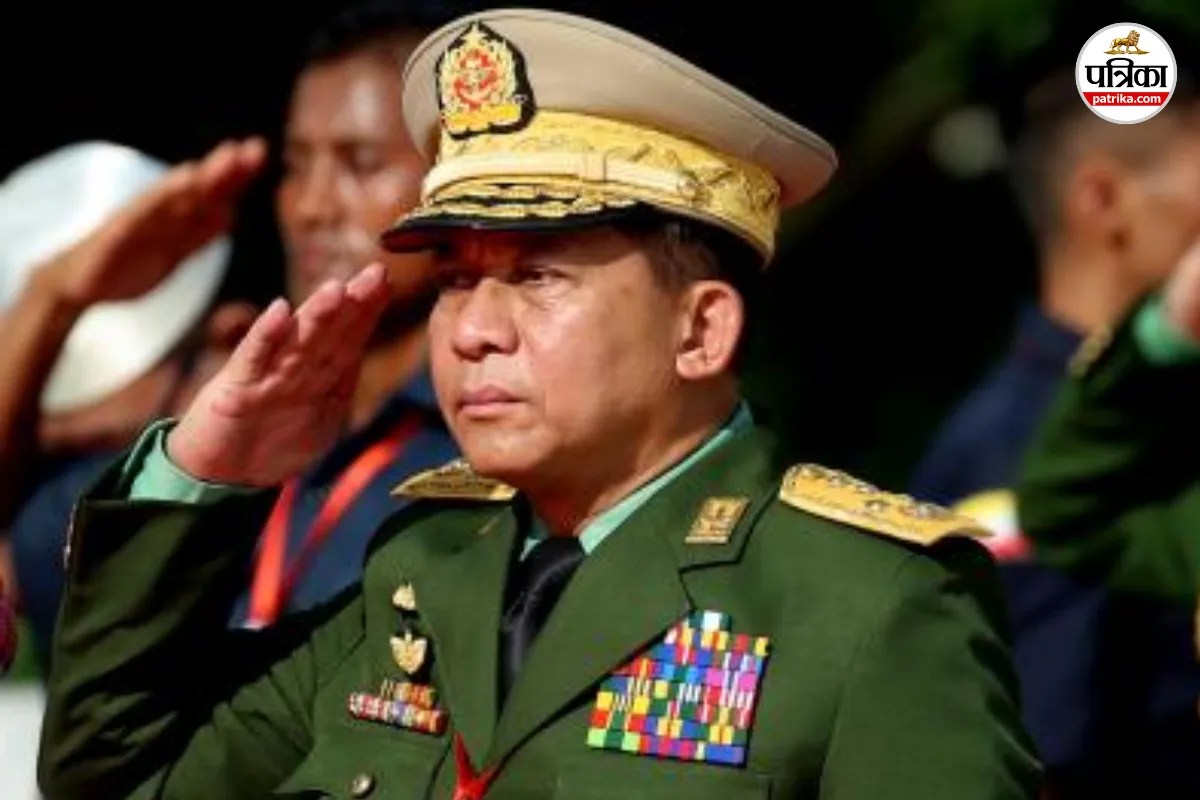
Min Aung Hlaing has finally moved from the shadows of a "caretaker" role into the official seat of the presidency in Myanmar. This transition is not a sign of political stability or a move toward civilian rule. Instead, it is a desperate consolidation of power by a military junta facing unprecedented territorial losses and internal dissent. By formalizing his role as President, Min Aung Hlaing is attempting to project a veneer of constitutional legitimacy to regional neighbors while tightening his command over a fractured state. The move effectively kills any lingering hope for a return to the 2008 Constitution’s power-sharing model, signaling that the military is prepared to rule over a burning house rather than negotiate an exit.
The Mirage of Constitutional Continuity
The elevation of General Min Aung Hlaing to the presidency is a masterclass in legal fiction. Since the February 2021 coup, the military—known as the Tatmadaw—has struggled to justify its existence beyond brute force. The previous Acting President, Myint Swe, was sidelined due to health issues, providing the perfect opening for the Senior General to bypass the traditional chain of command.
This is not a promotion. It is a survival tactic.
By holding the title of President, Min Aung Hlaing seeks to satisfy the technical requirements of the Association of Southeast Asian Nations (ASEAN) and international diplomatic protocols. He wants to be the person who signs the treaties and receives the credentials of foreign envoys. However, the reality on the ground mocks these titles. The military currently lacks effective control over more than half of the country’s territory. Ethnic Armed Organizations (EAOs) and People’s Defence Forces (PDFs) have carved out significant autonomous zones in the north, east, and west.
A Military Institution in Decay
Historically, the Tatmadaw viewed itself as the only glue holding Myanmar together. That myth has shattered. Under Min Aung Hlaing, the army has suffered its most humiliating defeats since independence in 1948. Operation 1027, launched by an alliance of ethnic militias in late 2023, didn't just take territory; it broke the military’s aura of invincibility.
Entire battalions have surrendered. Senior brigadier generals have been captured or executed by their own subordinates for cowardice. The decision to enforce a national conscription law earlier this year was a public admission that the volunteer force has evaporated. Young people are not fleeing to the jungle to fight for "democracy" in the abstract; they are fleeing because the junta is a sinking ship that wants to drag them down as ballast.
The internal morale of the officer corps is at an all-time low. There are quiet whispers in the mess halls of Naypyidaw about whether Min Aung Hlaing is the right man to lead. By taking the presidency, he is signaling to his own disgruntled colonels that there is no alternative. He has tied the fate of the institution entirely to his own personal survival. If he falls, the entire structure of military privilege—the vast business empires of Myanmar Economic Holdings Limited (MEHL) and Myanmar Economic Corporation (MEC)—falls with him.
The Geopolitical Tightrope
China and Russia remain the junta’s only significant lifelines, but their support is transactional and increasingly strained. Beijing cares about two things: the stability of its pipelines to the Indian Ocean and the eradication of cyber-scam centers operating on the border.
Min Aung Hlaing failed to deliver on both.
The ethnic alliances that humiliated the Tatmadaw in Shan State did so with a perceived green light from Beijing, primarily because the junta protected the "Pig Butchering" crime syndicates that China wanted gone. Now, by assuming the presidency, Min Aung Hlaing is trying to present a unified front to his northern neighbor. He is trying to say, "I am the only one who can guarantee your investments."
Russia, meanwhile, views Myanmar as a reliable customer for its fighter jets and a strategic partner in a world where Moscow has few friends left. But weapons alone cannot hold a country where the population has reached a point of total psychological break with the ruling class. The "democracy" mentioned in the junta’s state-run media is a hollow term, a ghost used to haunt the international community while the military prepares for a sham election that no credible observer will recognize.
The Economy of a Pariah State
While the generals play at high-stakes politics, the average citizen is living through an economic collapse. The kyat has plummeted in value. Basic commodities like rice and cooking oil have tripled in price. The junta’s response has been to arrest gold traders and currency exchangers, blaming "internal enemies" for the results of their own catastrophic mismanagement.
Foreign investment has fled. Companies that once saw Myanmar as the "last frontier" of Asian growth have realized that there is no profit in a war zone. The energy sector, once the crown jewel of the state’s revenue, is being choked by sanctions and the physical destruction of infrastructure.
Revenue Streams Under Fire
- Natural Gas: Revenues are being diverted or frozen in overseas accounts.
- Gemstones: The "blood ruby" trade continues but is increasingly forced through illicit channels, reducing the state's cut.
- Timber: Illegal logging is rampant in contested areas, with profits going to local warlords rather than the central treasury.
This economic desperation is what makes Min Aung Hlaing’s presidency so dangerous. He is not looking for a sustainable growth model; he is looking for enough cash to keep his soldiers fed and his planes fueled.
The Failure of the International Response
The world’s "Five-Point Consensus" plan has been a resounding failure. ASEAN’s policy of non-interference has allowed the junta to buy time, using "negotiations" as a stalling tactic while they carry out scorched-earth campaigns in the heartland. The National Unity Government (NUG), the civilian body representing the ousted parliament, remains underfunded and diplomatically sidelined despite controlling a significant portion of the resistance’s political narrative.
Sanctions have been targeted, but they are leaky. Middlemen in Singapore and Thailand still facilitate the flow of aviation fuel and dual-use technology. Until the global community treats the junta not as a government in crisis but as a criminal enterprise with a flag, the status quo will persist.
The Resistance Rebirth
What makes this conflict different from the uprisings of 1988 or 2007 is the level of coordination between the Bamar majority and the ethnic minorities. For decades, the military used a "divide and rule" strategy, convincing the central plains that the ethnic groups were the enemy. That lie has died in the smoke of burning villages.
The PDFs, composed largely of urban youth who traded laptops for rifles, are now fighting alongside seasoned Karen, Kachin, and Chin veterans. They are learning how to use drones to bypass the military’s heavy artillery advantage. They are building their own shadow administrations, schools, and clinics.
The junta’s biggest mistake was assuming the population would eventually get tired and submit. Instead, the brutality of the 2021 crackdown created a generation that believes they have nothing left to lose. They aren't fighting for a return to the flawed semi-democracy of the Aung San Suu Kyi era; they are fighting for a complete dismantling of the military’s role in public life.
The Presidency as a Final Stand
Min Aung Hlaing’s move into the presidential palace is the ultimate "all-in" bet. He has discarded the pretense of being a transitionary figure. He is now the face of the disaster. If the current offensive by the resistance continues to gain ground in the dry season, he will have no one left to blame.
The military’s strategy now relies on a singular, grim hope: that the resistance will eventually fracture along ethnic lines or that the international community will grow bored of the "forgotten war." They are betting that the world would prefer a stable dictatorship over a chaotic, multi-state collapse on China’s doorstep.
But stability is the one thing Min Aung Hlaing can no longer provide. He is the primary source of the chaos he claims to be fighting. Every bomb dropped on a village and every activist tortured in a Yangon prison serves as a recruitment poster for the resistance.
The presidency is not a new chapter for Myanmar. It is the final, desperate act of a man who knows that for him, there is no retirement, no exile, and no peaceful surrender. There is only the grip on the gun and the throne, and the knowledge that if he lets go of one, he loses both. The question isn't whether democracy will return through a junta-led election, but how much of the country will be left standing when the military finally implodes under the weight of its own greed and incompetence.
The time for diplomatic nuances and "wait-and-see" approaches has passed. The junta is a hollowed-out shell, and its leader has just pinned a new target on his chest. Expect the violence to escalate as the resistance realizes that the head of the snake is now sitting in the most prominent chair in Naypyidaw.