India is betting its energy security on the stable of the smallholder farmer. By scaling up the conversion of cattle waste into compressed biogas (CBG), the government aims to slash multi-billion dollar liquefied natural gas (LNG) import bills while insulating rural households from the volatility of global energy markets. This is not merely a story of traditional "gobargas" pits. It is a massive, industrial-scale infrastructure play designed to turn the world’s largest cattle population into a decentralized network of fuel refineries.
The math is as cold as it is compelling. India maintains over 300 million head of cattle. For decades, the dung from these animals was either burned in inefficient, smoke-heavy cakes or left to rot, releasing methane directly into the atmosphere. Today, the SATAT (Sustainable Alternative Towards Affordable Transportation) initiative and various rural electrification schemes are treating this waste as a strategic asset. By processing this biomass through anaerobic digesters, the state is attempting to solve three problems at once: waste management, soil degradation, and energy dependency.
The Industrialization of the Village Square
The shift from backyard pits to industrial CBG plants represents a fundamental change in rural economics. In the old model, a farmer kept a digester to power a single stove. In the new model, massive private-sector plants buy dung from entire clusters of villages. This turns a previously worthless byproduct into a steady cash crop.
These plants operate on a simple biological premise. Organic matter is broken down by bacteria in an oxygen-free environment. This produces biogas, which is roughly 60% methane. To make this "cashing in" viable for the national grid, that gas must be purified to over 95% methane. This brings it to the same caloric standard as the natural gas piped under the streets of London or New York.
Why the Gas Crunch Pinches Harder in the Heartland
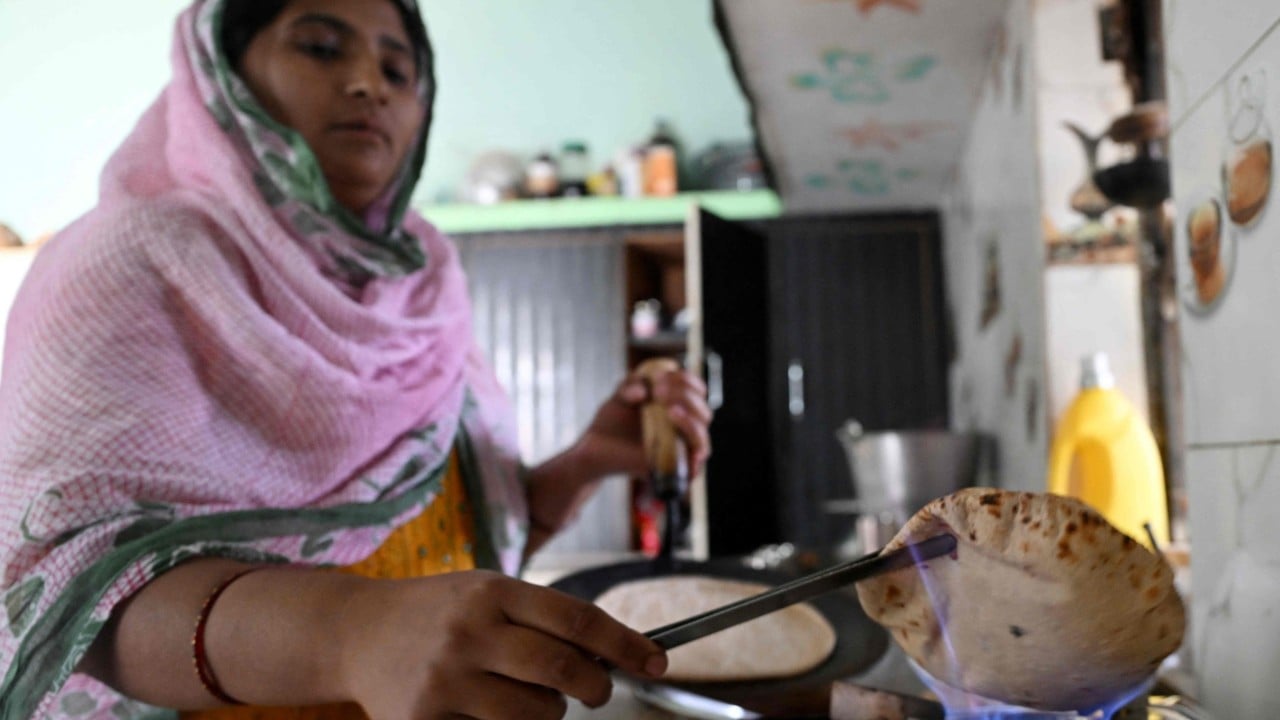
Global energy prices do not just affect city dwellers with cars. When the price of LNG spikes due to geopolitical friction in Europe or the Middle East, the Indian government’s subsidy burden for Pradhan Mantri Ujjwala Yojana (the flagship cooking gas program) becomes unsustainable. Millions of rural families rely on these five-kilogram or fourteen-kilogram cylinders. When the cost of a refill outpaces a day's wages, those families revert to burning wood and dung cakes.
This "fuel stacking"—using both clean and dirty fuels—is a public health disaster. Indoor air pollution remains a leading cause of respiratory illness in rural India. By localized production of biogas, the supply chain is shortened. You cannot easily block a supply line that runs from the barn to the local processing center. It creates a circular economy where the energy stays within the district it was generated in.
The Secret Weapon is the Slurry
Investors often focus on the gas, but the real profit might be in the sludge. After the methane is extracted, what remains is Fermented Organic Manure (FOM).
Chemical fertilizers have decimated the carbon content of Indian soil over the last half-century. The soil is tired. It is hungry for carbon. FOM is a nutrient-dense bio-fertilizer that can be sold back to the same farmers who provided the dung. This creates a closed-loop system. The farmer sells waste, buys back high-quality fertilizer, and uses the income to pay for the gas generated from his own animals.
Obstacles in the Path of the Bio-Boom
The vision is grand, but the execution is messy. Collecting dung from millions of scattered, small-scale farmers is a logistical nightmare. Unlike the massive feedlots of the American Midwest, Indian cattle are spread thin across tiny plots of land.
- Logistics Costs: Moving heavy, wet dung over long distances quickly eats into the margins of a biogas plant.
- Purity Standards: Maintaining consistent methane output requires a precise diet for the cattle, which most farmers cannot guarantee.
- Infrastructure Gaps: Many rural areas lack the roads or the piping necessary to move the gas from the plant to the consumer efficiently.
Private players are hesitant. They see the potential, but the "off-take" agreements—the guarantees that the government or oil marketing companies will buy the gas at a fixed price—are still being refined. Without a guaranteed price, the risk of a market crash remains too high for many mid-sized entrepreneurs.
The Geopolitical Shield
We must look at this through the lens of the national balance sheet. India imports roughly 50% of its natural gas requirement. Every cubic meter of biogas produced in a village in Uttar Pradesh or Punjab is a cubic meter that doesn't have to be bought in US dollars from Qatar or Russia.
This isn't just about cooking. Purified CBG can be compressed into cylinders for transport. We are seeing the early stages of tractors and local delivery trucks running on "cow power." It is a radical decentralization of power—literally. Instead of relying on a few massive ports and pipelines, the nation’s energy security is distributed across thousands of village-level nodes.
The Carbon Credit Frontier
The financial viability of these projects is increasingly tied to the global carbon market. Because methane is over 25 times more potent than carbon dioxide as a greenhouse gas, preventing its release from decomposing manure is a high-value environmental activity. Biogas plants can sell carbon offsets to international corporations looking to balance their emissions.
For a plant operator, these credits can mean the difference between a struggling business and a highly profitable one. It adds a layer of "invisible" income that isn't dependent on the local price of gas or fertilizer.
The Bottom Line for Rural India
The success of this transition depends on whether the "cow-to-kilowatt" pipeline can offer a cheaper, more reliable alternative than the traditional LPG cylinder. It is a race against time and technology. As solar power becomes cheaper and induction stoves more common, the window for biogas to dominate the rural kitchen may be closing.
However, the industrial demand for gas remains insatiable. Even if every rural home switches to electric cooking, the factories, trucks, and fertilizer plants will still need methane. The cow, long a symbol of spiritual wealth in India, is being re-engineered as the primary engine of a post-fossil fuel economy.
The infrastructure being laid today will determine if India can finally break its addiction to expensive, imported energy. The solution isn't buried in a deep-sea gas field; it is sitting in the mud of the village commons. If the logistics can be cracked, the "gas crunch" will become a relic of a less resourceful era.
Stop looking at the cow as a relic of the past and start seeing it as a 400-kilogram biological reactor. The future of Indian energy is walking on four legs, and the race to tap into that power is only just beginning.