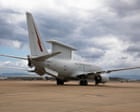
Australia is preparing to deploy a P-8A Poseidon maritime patrol aircraft to the Middle East, a move that signals a significant shift in the nation's strategic involvement in one of the world's most volatile maritime corridors. Defense Minister Richard Marles has confirmed that the government is actively considering further contributions to help secure the Strait of Hormuz. This decision places Canberra at a crossroads between its long-standing alliance obligations and the growing pressure to manage its limited military resources closer to home.
The Strait of Hormuz is a narrow chokepoint through which approximately one-fifth of the world’s oil passes daily. Any disruption there sends immediate shockwaves through global energy markets, manifesting as higher prices at Australian petrol pumps within days. While the deployment of a surveillance aircraft might seem like a modest gesture, it represents a calculated gamble in a region where miscalculation leads to rapid escalation.
The Strategic Logic of the Poseidon Deployment
The Boeing P-8A Poseidon is not merely a plane. It is a sophisticated intelligence-gathering platform designed to track surface vessels and submarines with surgical precision. By sending this specific asset, Australia is offering the United States and its partners high-end "eyes in the sky" rather than the "boots on the ground" or "hulls in the water" that defined previous decades of Middle Eastern involvement.
This choice serves two masters. First, it satisfies the expectation that Australia remains a reliable security partner in international coalitions. Second, it allows the Australian Defense Force (ADF) to provide a meaningful contribution without committing a frigate, which would be a far more taxing and risky endeavor for a navy currently undergoing a painful structural transition.
Why the Strait of Hormuz Matters to Canberra
Energy security is the blunt reality driving this policy. Australia’s domestic fuel reserves have historically been thin, leaving the nation vulnerable to supply chain ruptures. Even though much of Australia's crude oil comes from other regions, the globalized nature of oil pricing means that a tanker seizure in the Gulf is an economic event in Sydney and Melbourne.
The government's internal deliberations are focused on the concept of "freedom of navigation." This is more than a legal phrase. It is the foundation of the global trading system that Australia, as an island nation, relies upon for its very survival. If the rules of the sea are allowed to erode in the Middle East, the precedent set there could weaken the arguments Australia makes regarding maritime rights in the South China Sea.
The Stretching of Australian Defense Resources
There is a growing tension between Australia’s global ambitions and its regional realities. The 2023 Defense Strategic Review made it clear that the ADF must focus on its immediate neighborhood—the "Indo-Pacific." Committing assets to the Middle East, even high-tech ones like the Poseidon, pulls focus away from the primary theater where China’s influence is expanding.
Critics argue that every hour a Poseidon spends patrolling the Gulf is an hour it is not monitoring the approaches to the Australian continent. The fleet of P-8A aircraft is small. Maintenance schedules are grueling. Aircrews need rest. The math of military readiness is unforgiving, and Marles is currently attempting to balance these competing demands under the watchful eye of both Washington and Beijing.
The Problem of Mission Creep
History suggests that naval and air deployments in the Middle East rarely remain "one-off" events. What starts as a short-term surveillance mission can easily morph into a permanent presence if the security situation does not improve. The Strait of Hormuz is currently a theater of asymmetric warfare, where drones and fast-attack boats can challenge traditional military power at a fraction of the cost.
If an Australian aircraft were to be targeted, or if it were to witness an illegal seizure that it could not prevent, the pressure to escalate would be immense. The government has not yet clearly defined what the "exit criteria" for this mission would be. Without a clear end date, Australia risks being pulled back into a cycle of Middle Eastern security operations that it has spent the last five years trying to exit.
The Diplomatic Balancing Act
Australia’s involvement in the US-led Operation Prosperity Guardian and other maritime security constructs is watched closely by regional powers like Iran. Canberra has traditionally maintained a more nuanced diplomatic relationship with Tehran than Washington has, often acting as a bridge or a channel for de-escalation.
Moving from a stance of diplomatic concern to active military surveillance changes that dynamic. It signals a hard alignment that may limit Australia's future diplomatic flexibility. Marles must weigh whether the tactical benefits of the Poseidon mission outweigh the potential loss of a unique diplomatic voice in a region where few Western nations are still listened to.
Economic Implications of a Failed Passage
To understand the stakes, one must look at the hypothetical impact of a total closure of the Strait. While such an event is unlikely, even a 5% increase in insurance premiums for tankers passing through the region would result in a massive spike in the cost of goods. For an Australian economy already battling persistent inflation, these costs are untenable.
The "how else we can contribute" question that Marles is pondering likely includes cyber security cooperation, intelligence sharing, and perhaps the deployment of small specialist teams. These are lower-profile than a massive aircraft but are often more effective in the modern landscape of maritime threats.
Domestic Political Stakes
The Labor government is also navigating a complicated domestic political environment. There is a vocal segment of the Australian public that is wary of any military involvement in the Middle East following the long, costly campaigns in Iraq and Afghanistan. Marles is careful to frame this as a trade and security issue rather than a combat mission.
However, the opposition will be quick to point out any perceived weakness if the contribution is seen as too small to be effective, or any perceived recklessness if the ADF is stretched too thin. The political "sweet spot" is a mission that is visible enough to count as a contribution but discreet enough to avoid a significant public backlash.
The Reality of Maritime Surveillance
Operating a P-8A in the Gulf environment is a technical challenge. The heat and atmospheric conditions are brutal on sensitive electronics. The aircraft will be flying in some of the most congested and monitored airspace on the planet, where commercial airliners, military jets, and various drones share a narrow corridor.
The data gathered by Australian crews will be fed into a massive multinational intelligence fusion center. This is where the real value lies. Australia is not just sending a plane; it is providing a node in a global data network. This information allows tankers to be routed away from danger and provides the legal evidence required to hold state and non-state actors accountable in international forums.
Evaluating the Risks of Inaction
The alternative to contributing is to stay home and rely on others to keep the sea lanes open. This carries its own set of risks. If Australia expects the international community to support its interests in the Pacific, it must be seen as a contributor to global stability elsewhere. Security is a currency; you have to spend it to earn it.
Marles is currently checking the nation's balance sheet. The decision to send the Poseidon is a sign that the government believes the cost of a closed Strait is higher than the cost of a deployed squadron. It is a pragmatic, if uncomfortable, admission that Australia cannot yet afford to fully pivot away from the problems of the Middle East.
The coming months will test this pragmatism. As the P-8A begins its patrols, the focus will shift from the political announcements in Canberra to the operational realities over the water. The success of this mission will not be measured by what happens, but by what is prevented from happening. Security, in its most successful form, is invisible.
Australia must now prove it can operate effectively in this gray zone without losing sight of its primary responsibilities in the Pacific. The aircraft is on its way, but the harder questions about the depth of Australia's commitment remain unanswered. The Strait is narrow, the stakes are high, and the room for error is vanishingly small.
Hold the line on regional commitments while fulfilling the duties of a global citizen. That is the needle Richard Marles is trying to thread.