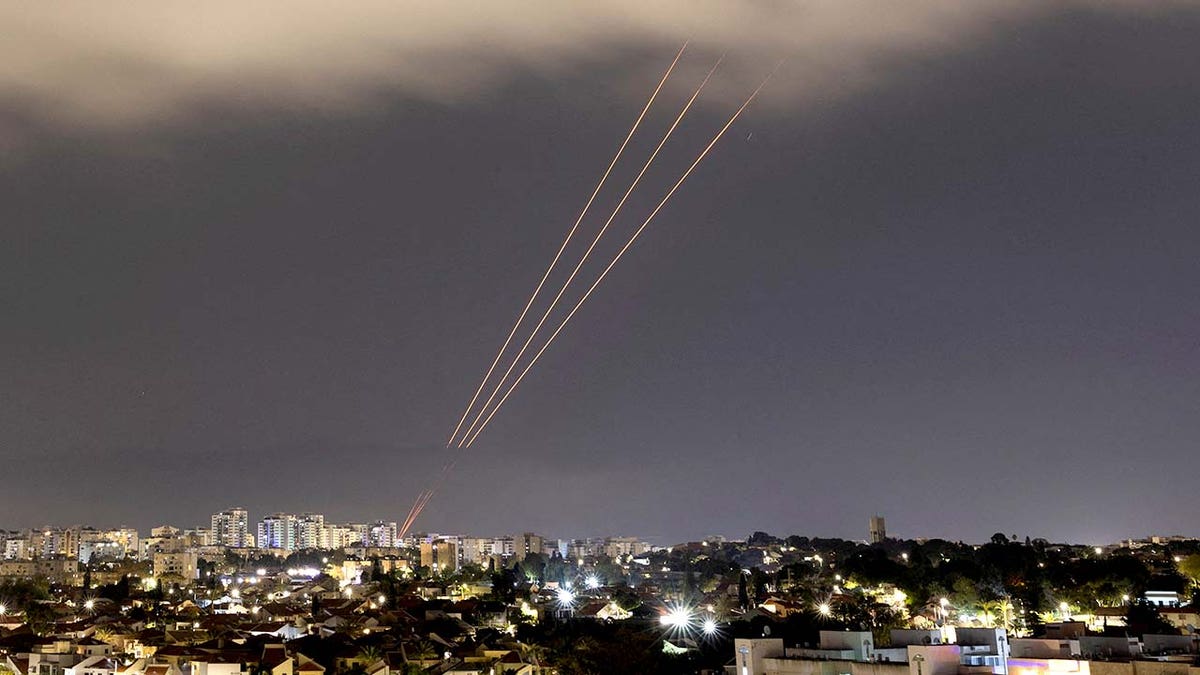
The strategic deployment of Iranian Unmanned Aerial Vehicles (UAVs) across the Middle East represents a fundamental shift from traditional kinetic warfare to a model of sustained economic and psychological attrition. By utilizing low-cost, mass-produced "loitering munitions"—specifically the Shahed series—Iran has effectively inverted the cost-exchange ratio of modern air defense. The objective is not necessarily the destruction of high-value military assets, but the exhaustion of the defender’s financial and logistical reserves. This strategy exploits a critical vulnerability in modern defense architecture: the disparity between the cost of a one-way attack drone and the interceptors required to neutralize it.
The Architecture of Low-Cost Lethality
Iranian drone doctrine rests on three technical pillars: accessibility of components, modularity of design, and decentralized production. These factors allow for a persistent threat level that high-end, exquisite military technology cannot easily match.
The COTS Integration Model
Unlike Western defense procurement, which relies on bespoke, hardened components, the Iranian UAV ecosystem utilizes Commercial Off-The-Shelf (COTS) technology. This includes:
- Civilian GNSS Receivers: Utilizing multi-constellation GPS and GLONASS modules found in consumer electronics, which are difficult to fully embargo.
- Internal Combustion Engines: Small, two-stroke engines—often based on German or Chinese designs used in model aircraft—provide the necessary range without the thermal signature or cost of a jet turbine.
- Inertial Navigation Systems (INS): Low-cost MEMS gyroscopes ensure that even if GPS jamming occurs, the drone maintains a predictable, albeit less accurate, flight path toward a large-area target.
Structural Simplicity and RCS
The Shahed-136 utilizes a delta-wing configuration constructed largely from carbon fiber or epoxy-based composites. This choice serves two functions. First, it simplifies the manufacturing process, allowing for assembly in small-scale workshops rather than centralized aerospace facilities. Second, the use of non-metallic materials, combined with a small physical cross-section, results in a low Radar Cross Section (RCS). While not "stealth" in a traditional sense, these drones are difficult for older radar systems to track, especially when flying at low altitudes to utilize terrain masking.
The Cost-Exchange Ratio Crisis
The primary metric of success for Iranian drone operations is the Cost-Exchange Ratio ($CER$). This is defined as the cost of the offensive munition divided by the cost of the defensive measure used to intercept it.
$$CER = \frac{Cost_{Offense}}{Cost_{Defense}}$$
In a sustainable conflict, a defender requires a $CER$ that approaches parity. In the current regional context, the $CER$ is heavily skewed in favor of the attacker. A Shahed-136 is estimated to cost between $20,000 and $50,000. In contrast, the interceptors used by regional powers—such as the MIM-104 Patriot (PAC-3) or the AIM-120 AMRAAM—range from $2 million to $4 million per unit.
The Attrition Mechanism
This fiscal imbalance creates a "Defensive Dilemma." If the defender chooses to intercept every drone, they face a rapid depletion of expensive missile inventories that cannot be replenished at the rate they are consumed. If the defender chooses not to intercept, the drone—despite its low sophistication—can inflict millions of dollars in damage to energy infrastructure, desalination plants, or civilian centers. This creates a state of perpetual readiness that is economically draining and operationally taxing for air defense crews.
Networked Proxy Deployment and Deniability
The distribution of these technologies to non-state actors—including groups in Yemen, Iraq, and Lebanon—serves to decentralize the point of origin, complicating the retaliatory calculus for targeted nations. This "transnational assembly line" ensures that even if a primary production facility is neutralized, the capability persists across the network.
Tactical Saturation and Swarming
Iranian-aligned forces often employ saturation tactics rather than single-unit strikes. By launching drones in "waves," they attempt to overwhelm the Target Tracking Capability (TTC) of regional Aegis or Patriot systems. Every radar has a finite number of targets it can illuminate and engage simultaneously. Once this threshold is crossed, subsequent drones in the wave have a high probability of reaching the target.
This is not a "swarm" in the sense of autonomous, communicating units, but rather a coordinated mass arrival. The psychological impact of these "cheap" strikes often outweighs the physical damage; it forces a sovereign state to admit its high-tech shield is permeable by "lawnmower-engine" technology.
Vulnerabilities in the Low-Cost Model
While the Iranian drone strategy is effective in the current vacuum, it possesses inherent technical limitations that can be exploited through focused electronic and kinetic countermeasures.
- Communication and Control Links: While many drones follow pre-programmed coordinates, those requiring terminal guidance are vulnerable to Electronic Countermeasures (ECM). Jamming the datalink between the operator and the drone can induce "lost link" protocols, often resulting in the drone crashing or missing its target.
- Acoustic Signature: The two-stroke engines used in these platforms are exceptionally loud. This allows for the deployment of low-cost acoustic sensor networks that can provide early warning and triangulation long before traditional radar picks up the small RCS of the drone.
- Low Velocity: Most Iranian loitering munitions travel at speeds below 200 km/h. This makes them susceptible to legacy anti-aircraft artillery (AAA) and Directed Energy Weapons (DEW), such as high-energy lasers, which have a significantly lower cost-per-shot than traditional missiles.
Strategic Shift toward Multi-Layered Defense
Countering the proliferation of cheap loitering munitions requires a departure from the "missile-for-a-drone" paradigm. A resilient strategy must be tiered and prioritized based on the value of the asset being protected.
Reintroducing Kinetic Volume
The most effective way to re-balance the cost-exchange ratio is through the re-adoption of rapid-fire gun systems. Systems like the C-RAM (Counter Rocket, Artillery, and Mortar) or modern 30mm/35mm programmed-fragmentation rounds provide a cost-per-engagement in the low thousands, rather than millions.
Electronic Warfare (EW) as a Primary Shield
Large-scale GNSS spoofing and jamming remain the most efficient way to neutralize drones relying on satellite navigation. By creating "no-fly" electronic zones around critical infrastructure, defenders can force drones into using less accurate INS navigation, significantly reducing the probability of a successful strike on a specific point target.
The Geopolitical Function of Proliferation
The export of these systems serves as a proof-of-concept for Iranian military industrialization. By demonstrating the ability to penetrate sophisticated air defense networks with budget technology, Tehran signals to both regional rivals and global powers that its "deterrence-by-denial" capability is functional. This is not just a tactical choice; it is a marketing tool for a defense industry that operates under heavy sanctions, proving that sophistication can be bypassed through sheer volume and strategic asymmetry.
The logical end-state of this trend is a regional arms race focused not on stealth aircraft or aircraft carriers, but on autonomous systems and the AI-driven software required to manage them. As detection technology improves, the drones will likely evolve to include basic obstacle avoidance and more resilient navigation, further escalating the technical requirements for the defense.
Regional actors must pivot from a procurement strategy based on "perfection" to one based on "sustainability." The era of the $4 million interceptor being the sole answer to the $20,000 drone is over. Future security depends on the ability to field mass-produced, low-cost defensive systems that can match the scale and economic reality of the threat. Focus must shift immediately toward high-volume kinetic systems and wide-area electronic suppression to negate the current economic advantage held by the attacker.