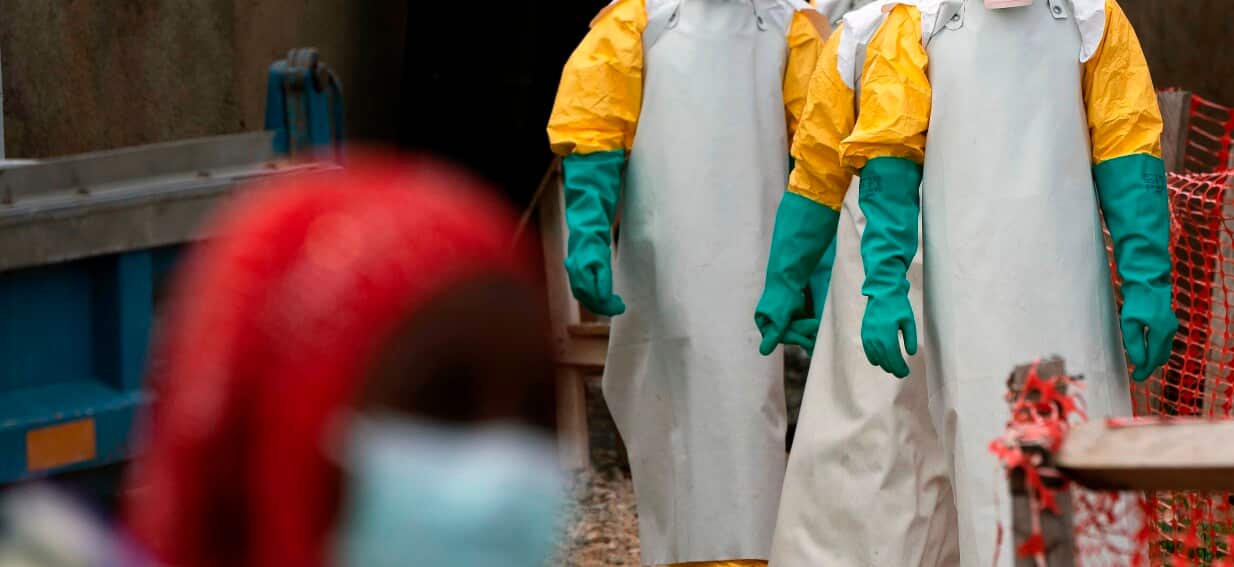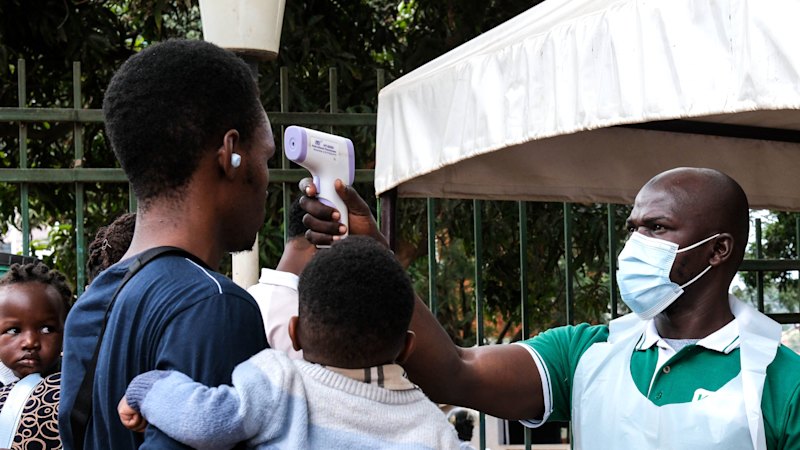
The declaration of a Public Health Emergency of International Concern (PHEIC) by the World Health Organization (WHO) regarding the Ebola virus disease outbreak in the Democratic Republic of Congo (DRC) and Uganda exposes a fundamental vulnerability in global health security. Epidemiological frameworks constructed over the last decade are calibrated for the Zaire ebolavirus strain. The current crisis involves the Bundibugyo ebolavirus variant, rendering standard pharmaceutical interventions obsolete and altering the containment equation.
Managing an outbreak without a validated therapeutic or prophylactic baseline requires a shift from vaccine-mediated suppression to hard operational containment. The emergence of documented cases in major urban transport hubs—specifically Kampala, Uganda, and Kinshasa, DRC—signals that transmission has outpaced localized surveillance mechanisms.
The Structural Failure of the Epidemic Response Baseline
Global biosecurity models rely on a dual-engine containment strategy: ring vaccination and targeted antiviral deployment. In past Zaire strain outbreaks, the Ervebo vaccine functioned as a mathematical circuit breaker, depressing the effective reproduction number ($R_t$) by immunizing contacts and contacts-of-contacts within a transmission cluster.
The Bundibugyo strain neutralizes this strategic asset. There are no approved vaccines or targeted therapeutics for Bundibugyo ebolavirus. This pharmaceutical deficit alters the transmission dynamics and response operations across three specific vectors.
+-----------------------------------------------------------------+
|                  Pharmaceutical Deficit Vectors                 |
+-----------------------------------------------------------------+
| 1. Prophylactic Failure: Complete absence of a vaccine corridor |
|    to insulate frontline health workers and urban populations.   |
|                                                                 |
| 2. Therapeutic Failure: Zero approved monoclonal antibody       |
|    treatments, driving expected mortality toward 50%.           |
|                                                                 |
| 3. Diagnostic Inversion: Initial sampling revealed an 81.5%     |
|    positivity rate (8 positive out of 13 samples), indicating    |
|    wide-scale undetected community transmission.                 |
+-----------------------------------------------------------------+
The high positivity rate within initial testing cohorts demonstrates a systemic lag in surveillance. When an outbreak is identified via a cluster of unexplained deaths rather than real-time syndromic surveillance, the virus has already completed multiple replication cycles within the population. The data indicates that the virus circulated silently in Ituri province for weeks before formal identification, establishing a broad reservoir of infection that undermines contact tracing.
Transmission Dynamics in Friction-Heavy Corridors
The geographic center of this outbreak, Ituri province, operates under a political economy that complicates standard epidemiologic interventions. The region is characterized by high-velocity population movement tied to artisanal gold mining, cross-border informal trade, and structural insecurity caused by active armed groups.
The movement patterns of the mining sector create a high-risk transmission network. Workers shift dynamically between remote, informal excavation camps and high-density regional trading hubs such as Bunia, Rwampara, and Mongbwalu. This structural churn generates high-frequency contact nodes that accelerate transmission across health zones.
The security friction in eastern DRC restricts epidemiologic access, creating structural blind spots. Armed conflict prevents regular, reliable contact tracing and community isolation protocols. When formal health teams cannot safely enter a zone, case validation halts, causing a critical data deficit.
The risk is illustrated by the rapid escalation to urban centers. The identification of two independent, laboratory-confirmed cases in Kampala and a confirmed case in Kinshasa shifts the crisis from a localized rural cluster to an interconnected urban network challenge. Kinshasa, a megacity of approximately 20 million people, represents an environment where the population density and informal infrastructure can accelerate transmission.
The Vector Inversion Problem
Data from the Africa Centers for Disease Control and Prevention (Africa CDC) and the WHO highlights a critical operational vulnerability: the infection and death of at least four healthcare workers under conditions consistent with viral hemorrhagic fever. This points to nosocomial transmission—infection occurring within medical facilities.
When healthcare workers become vectors, the containment model collapses in two distinct phases.
Phase 1: Institutional Amplification
Medical facilities become amplification hubs rather than containment zones. Patients presenting with early, non-specific symptoms—such as fever, fatigue, and muscle pain—are triaged alongside general populations without adequate personal protective equipment (PPE) calibrated for a non-vaccine environment.
Phase 2: Community Decoupling
High rates of healthcare worker mortality break down community trust. When seeking formal medical treatment correlates with death, symptomatic individuals avoid formal triage lines. This drives infections underground, forcing care into unmonitored domestic settings, which increases transmission through household caregiving and traditional burial practices involving direct contact with infectious bodily fluids.
The Economic Bottleneck of Border Closure Paradoxes
When an international health emergency is declared, the default political reaction is often border closure and unilateral trade restrictions. However, macroeconomic and epidemiologic models demonstrate that formal border closures increase transmission risk in regions with porous geography.
The frontier separating eastern DRC and western Uganda cannot be sealed by conventional enforcement. It relies on a system of formalized border crossings flanked by hundreds of informal, unmonitored routes (panyas). Restricting formal commerce and transit imposes an economic penalty on populations dependent on daily trade, forcing travel underground.
Formal Closures ---> Shift to Unmonitored Crossings ---> Elimination of Screening ---> Unchecked International Spread
By shutting down formal transit points, public health authorities eliminate their primary points of data collection: temperature monitoring, rapid symptomatic screening, and travel history logging. The movement of people does not stop; it becomes invisible. This prevents tracking and transforms a manageable cross-border movement into an untraceable regional spread.
Strategic Operational Recommendations
Containing the Bundibugyo outbreak requires moving away from the assumption that a medical intervention will arrive in time to halt transmission. The deployment of experimental therapeutics, such as remdesivir or unapproved monoclonal antibodies, must be treated as secondary clinical trials rather than a primary defense strategy.
Operational priority must be directed toward non-pharmaceutical containment frameworks executed at scale.
- Establish Internal Transport Nodes for Syndromic Screening: Instead of cross-border closures, deploy high-frequency screening checkpoints along major internal roads and supply lines connecting Ituri province to Bunia, Kampala, and Kinshasa. These checkpoints must utilize standardized isolation protocols for any traveler exhibiting an elevated thermal signature or acute systemic symptoms.
- Deploy Aggressive Point-of-Care Diagnostic Infrastructure: Shift diagnostic capabilities away from centralized laboratories to decentralized field units in mining hubs like Mongbwalu. Reducing the turnaround time for sample analysis from days to hours is critical for minimizing the window of unmonitored exposure and accelerating contact tracing.
- Implement Low-Tech, High-Security Isolation Isolation Protocols: Given the lack of a vaccine shield for healthcare workers, isolation units must operate under strict infection prevention and control (IPC) standards. This requires establishing rigid physical barriers and dedicated supply chains for high-grade PPE to protect frontline staff from nosocomial transmission.
- Standardize Safe and Dignified Burial (SDB) Teams: Because the viral load peaks at the time of death, immediate containment of deceased patients is vital. Mobilizing localized, community-vetted SDB teams ensures that traditional funeral rites are modified without causing community resistance or driving deaths into unmonitored domestic spaces.
The containment of the Bundibugyo strain depends on the speed, discipline, and execution of physical public health measures. If operations are not adjusted to account for the lack of vaccines and the realities of regional transport networks, the virus will continue to exploit urban transit corridors, expanding the outbreak beyond the capacity of current regional isolation frameworks.