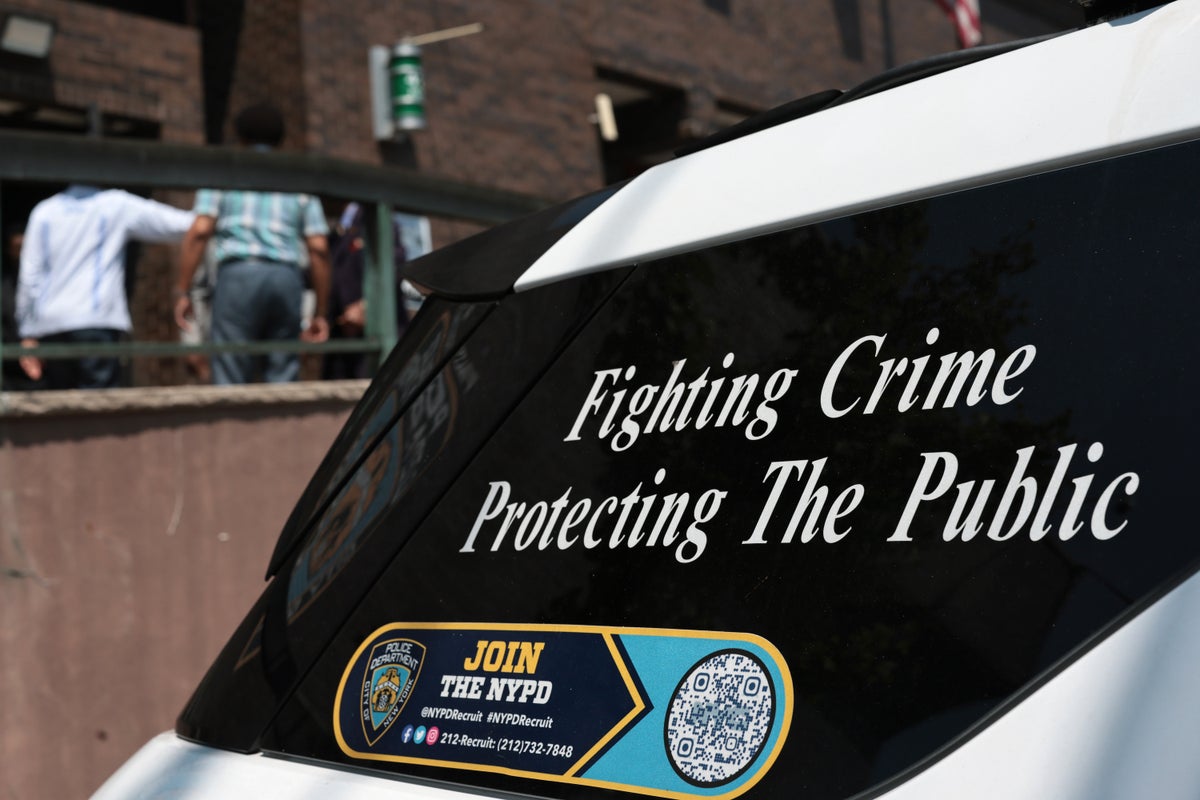
$117 million is a rounding error.
When the headlines hit about New York City’s 2025 payout for NYPD misconduct, the outrage machine followed a predictable script. Activists screamed about "taxpayer theft," and pundits demanded "accountability" as if it were a commodity you could buy at a hardware store. They are all looking at the wrong ledger.
The lazy consensus says that $117 million represents a failure of policing. In reality, that figure represents a masterclass in risk management and administrative efficiency. For a city with an annual operating budget hovering around $112 billion, spending 0.1% to lubricate the friction of urban governance isn't a scandal—it’s a bargain.
The Litigation Tax is the Price of Density
Stop viewing police settlements as "penalties." Start viewing them as a "litigation tax."
In any organization with roughly 34,000 uniformed officers and millions of daily interactions, friction is a mathematical certainty. If you run a logistics company with 30,000 trucks, you don't act shocked when there are fender benders. You budget for them. You buy insurance. You settle quickly to keep the wheels turning.
The $117 million figure isn't an indictment of the rank-and-file; it is the cost of doing business in a litigious society where the bar for filing a claim is lower than the curb on Broadway. To "fix" this number, you would have to either stop policing entirely or overhaul the entire American tort system. Since neither is happening, the city chooses the path of least resistance: the settlement.
Why the City Loves to Lose
The public assumes the city fights and loses. The truth is more cynical: the city chooses to lose because winning is too expensive.
I have seen legal departments in the private sector burn $500,000 in billable hours to avoid a $100,000 payout just on "principle." Principles are for people who don't have to balance a municipal budget. New York’s Law Department is a factory. They look at a claim, calculate the cost of a three-year discovery process, factor in the unpredictability of a Bronx jury, and write a check.
The Math of Capitulation
- Average Settlement Cost: $20,000–$50,000 for "minor" civil rights violations.
- Cost of Full Defense: $150,000–$300,000 (Expert witnesses, depositions, thousands of man-hours).
- The Rational Choice: Pay the "hush money" to the legal system to avoid the trial tax.
By settling, the city avoids setting unfavorable legal precedents. They keep the messy details of internal affairs out of the public record. They buy silence and speed. If they actually fought every "meritless" case, the $117 million would likely double just in administrative overhead.
The Misconduct Industrial Complex
We need to talk about the "Police Litigation Bar." There is an entire economy of law firms that exist solely to harvest these settlements. They aren't looking for justice; they are looking for volume.
These firms know the city’s "break-even" point. They file suits that are just plausible enough to survive a motion to dismiss, knowing the city will settle for a "nuisance value." It’s a symbiotic relationship. The lawyers get their 33%, the plaintiff gets a few thousand dollars, and the city gets to close a file.
When you see that $117 million, understand that a significant portion of it is simply a transfer of wealth from the city treasury to a handful of law offices in Lower Manhattan. We aren't funding "misconduct"; we are funding a specialized legal ecosystem.
The Myth of the "Bad Apple" Metric
The most common "People Also Ask" query is: Why doesn't the city just fire the officers who get sued the most?
It sounds logical. It’s actually catastrophic. If you fire every officer with multiple settlements, you aren't firing the "bad" cops; you’re firing the active ones.
The officers with the most lawsuits are almost always those assigned to the most violent precincts, working the most dangerous shifts, making the most arrests. An officer in a high-crime neighborhood in East New York will encounter more resistance, more false accusations, and more litigious suspects in a week than a suburban cop will in a career.
Using settlement data as a performance metric creates a "chilling effect."
- Reactive Policing: Officers stop engaging because every interaction is a potential lawsuit.
- The "Drive-By" Strategy: Cops patrol by driving through neighborhoods without ever getting out of the car.
- Safety Degradation: Crime rates spike because the risk-reward ratio for an officer is broken.
If you want zero settlements, you’ll get zero policing. Choose one.
The Insurance Fallacy
Critics often argue that officers should carry their own professional liability insurance, much like doctors do. They claim this would "market-regulate" misconduct.
This is a fantasy.
First, no private insurer would touch a NYPD officer for a premium that an officer could actually afford. The risk profile is too high. Second, if the city forced this, the PBA (Police Benevolent Association) would immediately negotiate a salary increase to cover the premiums. The money would still come from the taxpayer; it would just be laundered through an insurance company that takes a 20% cut for "administration."
The Zero-Sum Game of "Accountability"
Every time a settlement is reached, the comptroller’s office releases a report about "holding the NYPD accountable." This is theater.
Real accountability is expensive. It requires years of training, a complete overhaul of the civil service laws that protect bad actors, and a societal shift in how we view the role of the state. It’s much cheaper to write a check for $117 million and pretend the problem is being addressed.
The city is essentially paying a "subsidized peace" tax. They pay the plaintiffs to go away, they pay the public with a press release about "declining payouts," and they keep the status quo because the status quo is the only thing that functions.
The Real Statistics Nobody Quotes
- Total NYPD Interactions (2025): Millions.
- Lawsuits Filed: Roughly 3,000 to 5,000.
- The Friction Rate: Less than 0.1%.
In any other industry—manufacturing, healthcare, retail—a 99.9% "success" rate (meaning interactions that don't result in legal action) would be lauded. In policing, the 0.1% failure is treated as the whole story.
Stop Complaining and Start Pricing the Risk
If you want to actually disrupt this cycle, stop looking at the $117 million. That is the symptom, not the disease.
The disease is a legal system that rewards volume over merit and a political system that finds it more convenient to settle than to lead. We have commodified civil rights violations. We have turned police misconduct into a predictable line item in the municipal budget, right next to salt for the roads and school lunches.
The contrarian truth is that New York City doesn't want the settlements to stop. If the lawsuits stopped, it would mean the police have stopped doing their jobs, or the legal system has become so efficient that lawyers can no longer make a living. Neither of those outcomes is acceptable to the people in power.
The $117 million isn't a sign of a city in crisis. It’s the sound of a massive, bloated machine purring perfectly. It’s the price of a quiet life for the politicians who don't want to actually fix the underlying social friction that leads to these encounters in the first place.
Accept the "Litigation Tax" for what it is. Or, keep screaming at the $117 million figure while the city continues to pay it, year after year, as the cheapest possible way to keep the lights on and the lawsuits at bay.
Stop asking why the city is paying. Start asking why you still think they have a choice.


.png?width=1200&auto=webp&crop=3%3A2)
